“`html
The Reflection of Gatsby’s Emotions in His House
In F. Scott Fitzgerald’s “The Great Gatsby,” Jay Gatsby’s mansion is more than just a grandiose residence; it is a reflection of his inner world and emotional state. This blog post delves into how each aspect of Gatsby’s elaborate home mirrors his feelings and aspirations. We will explore the significance of the house’s grandeur, its emptiness, the parties within it, and the ultimate decay that follows Gatsby’s tragic trajectory. Through these subheadings, we will uncover how Fitzgerald uses the setting of Gatsby’s home to convey deeper meaning and illuminate Gatsby’s complex character.
The Grandeur of Gatsby’s Mansion: A Symbol of Aspirations
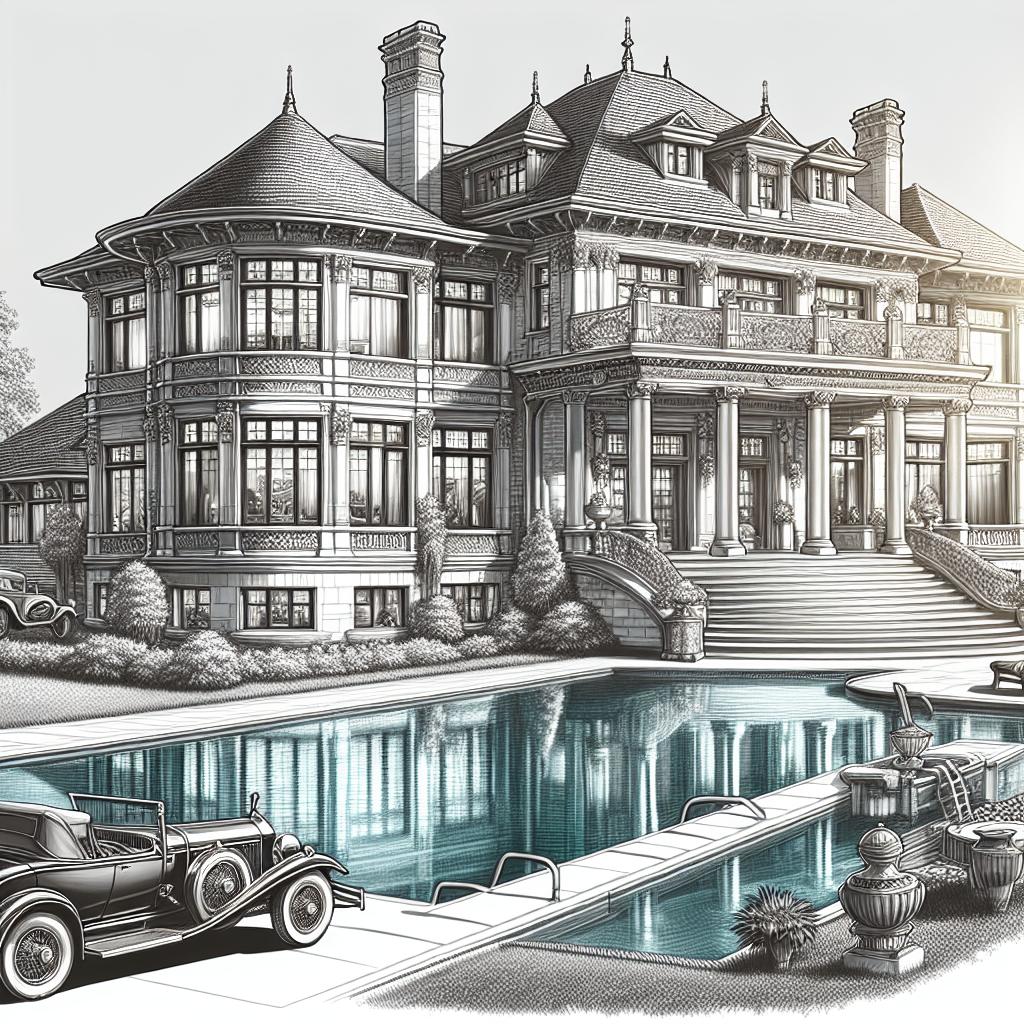
Gatsby’s mansion stands as a symbol of his immense aspiration to attain the ultimate American Dream. Its grandiose architecture, modeled after a French chateau, reflects Gatsby’s desire for wealth and status. The opulent rooms and extravagant decorations serve as physical manifestations of Gatsby’s ambition to transcend his humble origins and reinvent himself as a man worthy of Daisy Buchanan’s love.
The sheer size of the mansion also mirrors Gatsby’s longing to fill a void in his life with material success and social standing. Each lavish detail of the house is meticulously designed to impress and captivate, much like Gatsby’s own carefully constructed persona. In creating such a majestic abode, Gatsby attempts to not only attract Daisy but also to prove to himself that he has achieved greatness and fulfilled his dreams.
The Emptiness Behind the Facade: Loneliness and Isolation
Despite its grandeur, Gatsby’s mansion often feels eerily empty, emphasizing the profound loneliness that underlies Gatsby’s existence. The house is filled with guests during his famous parties, yet devoid of true companionship and genuine relationships. This paradox mirrors Gatsby’s isolation amid social gatherings, underscoring the superficial nature of his connections.
Within the hollow corridors of his colossal home, Gatsby’s solitude is profound. His most intimate moments are spent staring longingly at the green light across the bay, illustrating his internal sense of separation from those he desires to be close to. The emptiness of the mansion thus becomes a powerful metaphor for Gatsby’s inner void, revealing how wealth and status have failed to bring him lasting happiness or meaningful relationships.
Extravagant Parties: Symbolizing Hope and Desperation
Gatsby’s parties are legendary, filled with opulence, excess, and a sense of desperate hope. They represent Gatsby’s attempt to attract Daisy and recreate the past. The colorful lights, music, and dancing guests symbolize his aspirations for a lively and fulfilling life with Daisy by his side, reminding him of a time when his love was not yet unrequited.
Ethereal and dreamlike, the parties also illustrate Gatsby’s intense yearning for a future that mirrors his idealized memories of the past. However, they ultimately highlight his desperation as each festivity concludes without Daisy’s presence or the fulfillment of his dreams. The extravagant gatherings become a momentary escape from reality, but their futility underscores Gatsby’s tragic inability to reconcile the past with the present.
The Decay of the Mansion: Reflecting Disillusionment and Tragedy
As the novel progresses and Gatsby’s dreams begin to crumble, the state of his mansion reflects his diminishing hope and growing disillusionment. The grandeur fades as the once-lively parties cease, and the house is left to decline. This deterioration symbolizes the unraveling of Gatsby’s carefully crafted life and the collapse of his dreams.
Following Gatsby’s death, the mansion falls into disrepair, mirroring the emptiness of his unfulfilled ambitions. The house, once a vibrant testament to Gatsby’s hope and determination, becomes a silent monument to his tragedy. This decay poignantly captures Gatsby’s journey from idealism to disillusionment, reflecting the ultimate futility of his pursuit of an unattainable dream.
Lessons Learned
| Subheading | Summary |
|---|---|
| The Grandeur of Gatsby’s Mansion | Represents Gatsby’s aspirations for wealth, status, and love. |
| The Emptiness Behind the Facade | Highlights Gatsby’s loneliness and isolation despite social success. |
| Extravagant Parties | Symbolize Gatsby’s hope and desperation to achieve his dream with Daisy. |
| The Decay of the Mansion | Reflects Gatsby’s disillusionment and the ultimate tragedy of his unattainable dreams. |
“`